Fitzcarraldo: a special screenplay for a special film
The copy of the Fitzcarraldo screenplay acquired by the Museo Nazionale del Cinema reveals rock star Mick Jagger’s involvement in the first version of Werner Herzog’s masterpiece
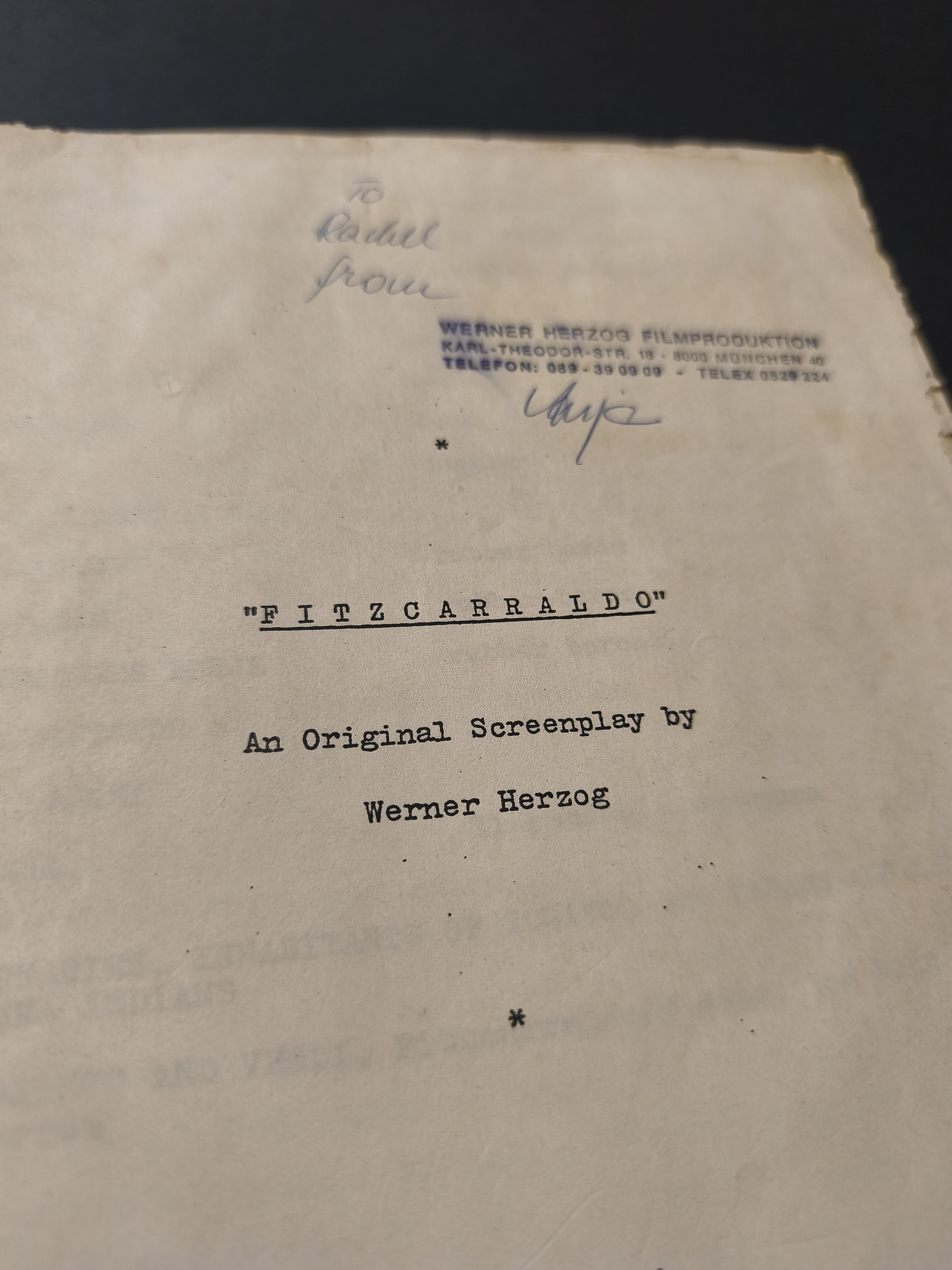
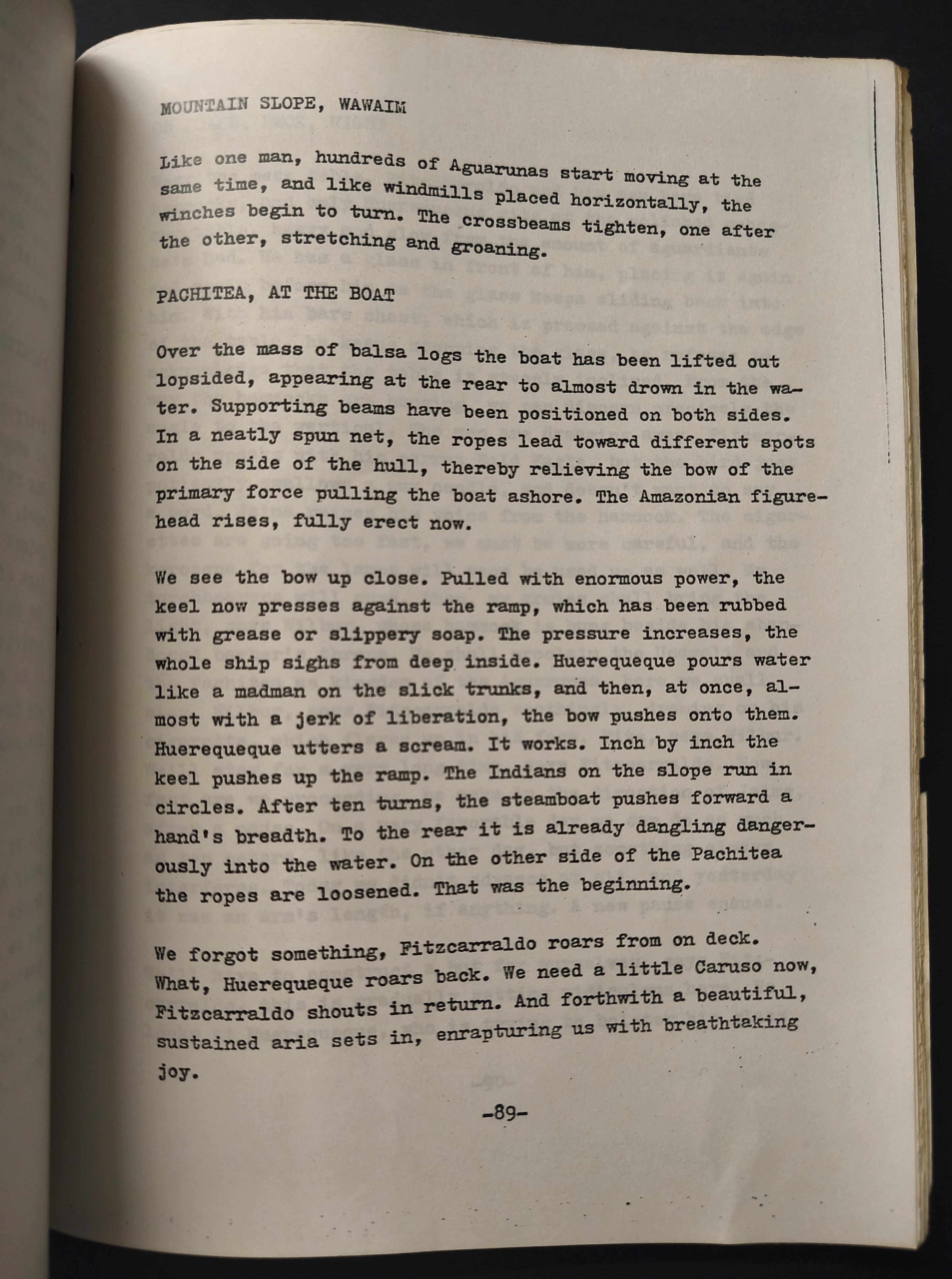
Among the most important documents to illustrate the history of cinema, screenplays allow us to reconstruct the genesis of films and trace their evolution. This is the case with the original screenplay for Werner Herzog’s Fitzcarraldo, a 113-page typewritten document in English that testifies to the project’s first version and offers a close-up view of the creative process behind one of the most famous and complex films in the history of cinema, marked by a long and troubled production.
The film narrates the story of Brian Sweeney Fitzgerald, known as Fitzcarraldo, a visionary with a passion for opera who dreams of building a grand opera house in the heart of the Amazon rainforest. To achieve this, he must attempt a seemingly impossible feat.
The document has distinctive features: it does not follow the usual typographical distinction between scene descriptions and dialogue, and it reflects a stage of the project that was still in progress. The protagonist, Fitzcarraldo, was a matter of fact initially split into two distinct characters, played by the actor Jason Robards and by a surprising co-star: the singer Mick Jagger. The latter had already filmed many scenes for the film but – given the enormous delays accumulated by the production due to accidents and tensions, and additionally because of the serious illness that had struck Robards – he was forced to abandon filming to go on tour with the Rolling Stones. His character was therefore completely cut from the final version of the film, which was reshot from scratch with Klaus Kinski in the lead role instead of Robards.
A long time passed between this screenplay and the making of the final film: the first shooting with Jason Robards and Mick Jagger had begun in the remote Amazon in 1979, but filming with Klaus Kinski was not completed until 1981. The film, presented at the Cannes Film Festival in 1982, earned Herzog the award for Best Director.
The screenplay, held at the Historical Archive of the Museo Nazionale del Cinema, was acquired from the film director Maurizio Sciarra. In an attached letter, Sciarra himself explains how he came into possession of the script: his friend Gloria Fava, a make-up artist who was due to work on the film for Claudia Cardinale, asked him to translate it from English into Italian. The inscription on the cover, ‘To Rachel from Werner Herzog’, suggests that the copy was originally intended for Rachel Griffiths, the film’s script supervisor.
Preserved for years as a precious artefact, the screenplay was acquired by the Museo Nazionale del Cinema with the aim of preserving the memory of the first – and never completed – version of a film that is fundamental to the history of cinema. This document offers an insight into how an idea can evolve over time: even before the film was released in cinemas, these 113 pages describe the incredible and adventurous story of the making of Fitzcarraldo.